

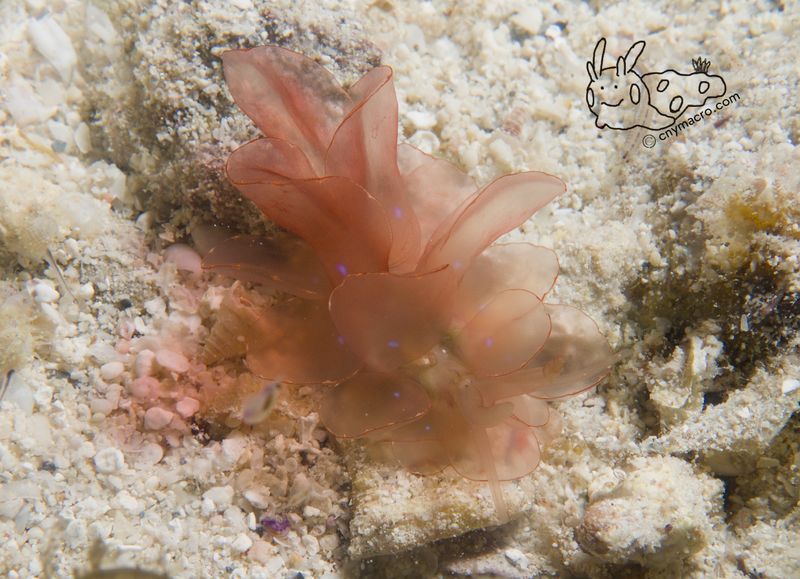
Scientific Name: Cyerce sp. 3
Common Name: Cyerce sp.
Adult Size: ~20–40 mm
Depth Range: 5 – 25 m; typically found on sandy bottoms, coral rubble, or mixed reef slopes
Biotope / Habitat: Usually encountered on sand or rubble areas close to algae growth. Like other members of the genus Cyerce, it likely associates with green algae where it can both feed and hide among the fronds during the day. This species is mainly active at night, when it moves across the substrate in search of food.
Diet: Herbivorous sacoglossan that feeds primarily on green algae, possibly species of Caulerpa or related algae. Like other sacoglossans, it may retain functional chloroplasts from the algae it consumes, allowing limited kleptoplasty—a process where stolen chloroplasts continue producing energy through photosynthesis inside the slug’s tissues.
Reproduction: Simultaneous hermaphrodite. Individuals exchange sperm during mating and lay delicate gelatinous egg ribbons on algae or nearby substrate. The eggs hatch into planktonic veliger larvae that drift in the water column before settling and metamorphosing into juvenile slugs.
Fun Fact: Members of the genus Cyerce are known for their leaf-like cerata, which resemble delicate petals. If threatened, they can shed some of these cerata in a defense strategy called autotomy, distracting predators and allowing the slug to escape.
Elegant and delicate, Cyerce sp. 3 looks almost like a drifting underwater flower when it moves. Its translucent pink cerata and slow, graceful motion make it a magical sight during night dives—one of those small macro treasures that rewards patient divers exploring the reef after dark.