


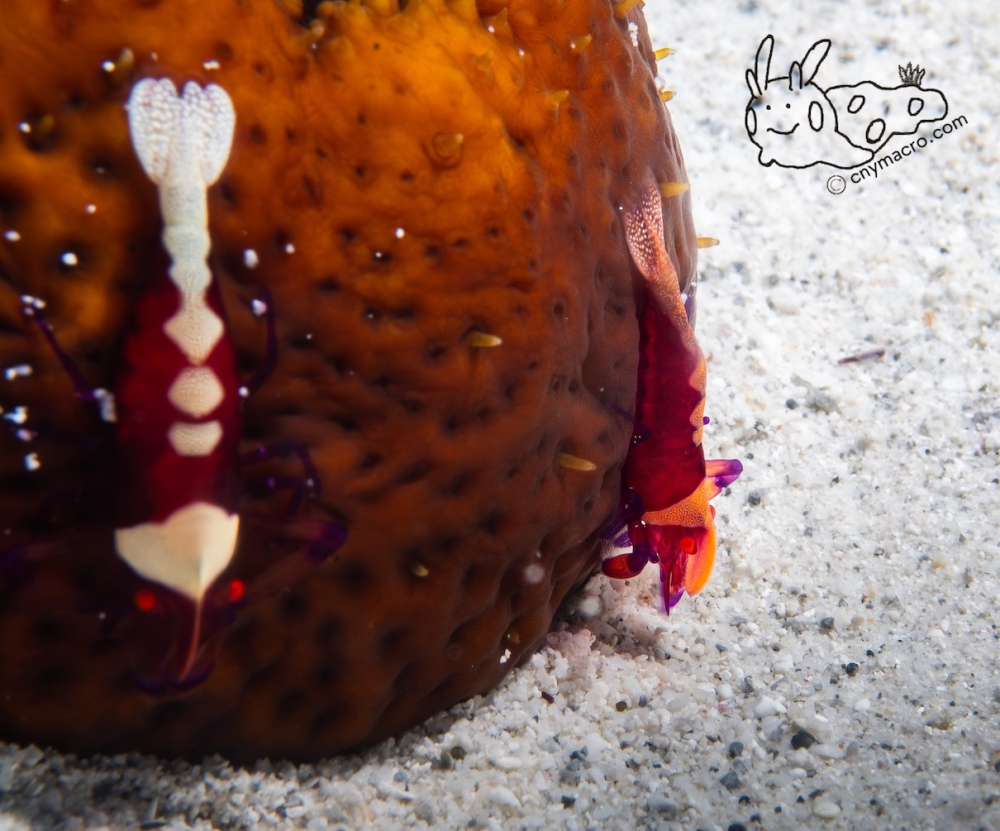
Scientific Name: Periclimenes imperator
Common Name: Emperor shrimp
Size: Up to 2 cm
Depth Range: 5 – 40 m
Habitat: Lives in close association with host invertebrates such as sea cucumbers, nudibranchs, starfish, and sea slugs; rarely seen away from its host
Diet: Omnivorous—feeds on detritus, microorganisms, mucus from its host, and occasionally parasites or leftover food particles
Reproduction: Separate sexes; females carry fertilized eggs under their abdomen until they hatch into planktonic larvae
Fun Fact: The emperor shrimp’s bold purple, white, and orange coloration acts as a warning signal and may advertise a cleaning role—or simply deter predators by association with its often toxic hosts.
Observation Tip: Scan sea cucumbers and large nudibranchs carefully—the shrimp often sits motionless on top, perfectly camouflaged by color and pattern. A slow approach is key, as they can dart quickly to the opposite side of their host when disturbed.