


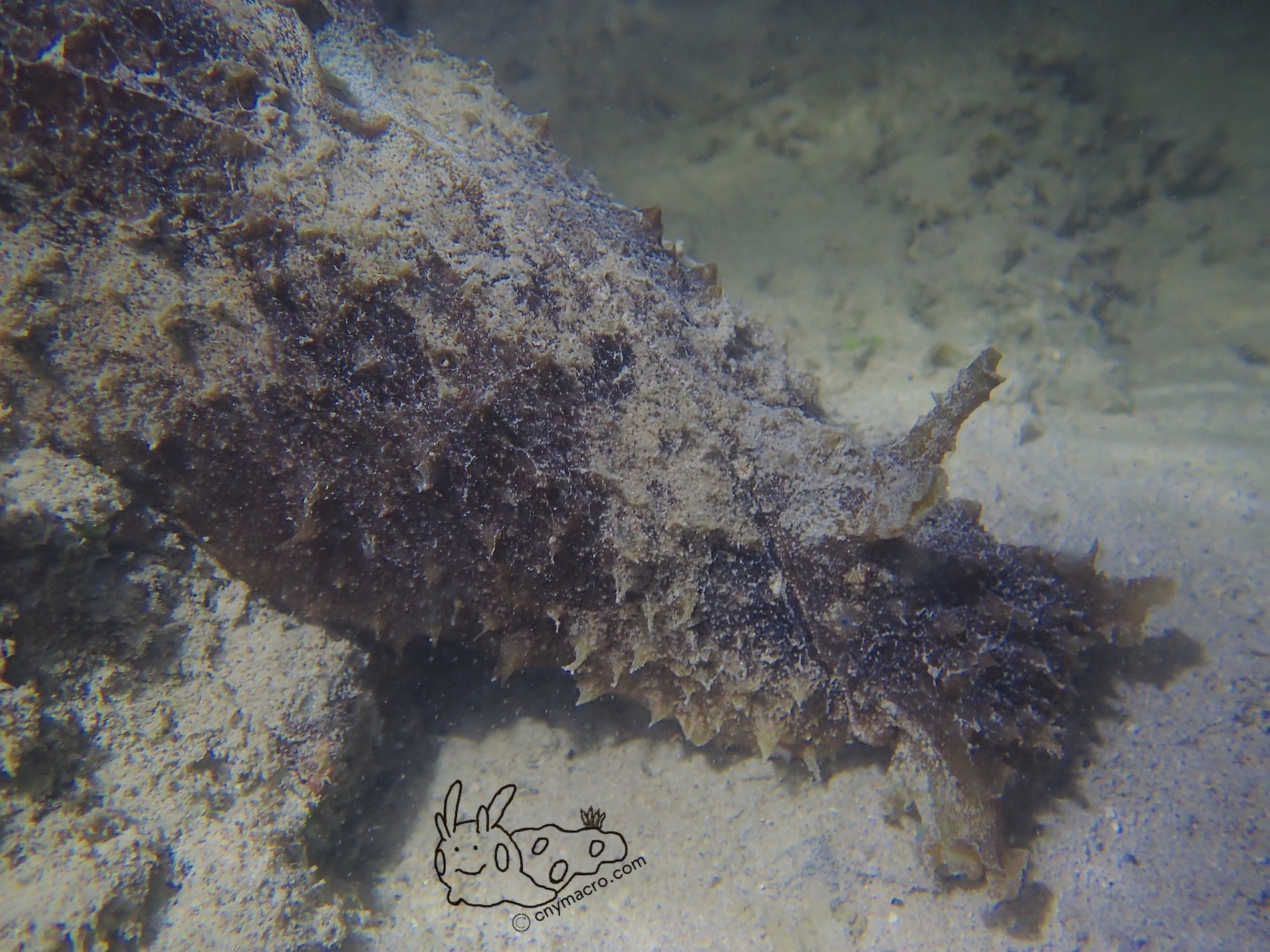
Scientific Name: Dolabella auricularia
Common Name: Wedge Sea Hare / Shoulderblade Sea Cat
Adult Size: 12 – 500 mm (common length ~12 cm; can reach up to 50 cm)
Depth Range: 2 – 71 m; typically found in seagrass flats and shallow sheltered environments, particularly bays and lagoons
Biotope / Habitat: Usually encountered in sheltered bays, lagoons, seagrass beds, sandy or muddy bottoms, and large tidal pools. Nocturnal by nature, it hides under rocks during the day and actively moves across reef flats and seagrass beds at night. Its coloration, ranging from light brown and purplish-brown to various shades of olive green and near-black, is always mottled — providing excellent camouflage within its surroundings.
Diet: A herbivore, it feeds on a wide variety of brown, green, and red macroalgae, and actively maintains a mixed diet rather than relying on a single algal species. Its broad diet also includes various seagrass species.
Reproduction: A simultaneous hermaphrodite, like most members of the order Anaspidea. Individuals form mating chains, then lay egg masses containing between 80 and 500 million eggs, which hatch within 10 to 12 days. Larvae develop as planktonic veligers for approximately 30 days before metamorphosing and settling onto suitable substrate.
Fun Fact: Like all sea hares, Dolabella auricularia ejects a cloud of purple ink when disturbed — a striking and effective defense mechanism! Unlike most gastropods, it can live up to six years in an aquarium, making it one of the longest-lived species in its group. It is also studied by researchers for its bioactive compounds, which show promising potential in cancer!